

The Ministry of Environment, Urbanization and Climate Change imposed an administrative fine of TRY 8,391,988 on the Istanbul Water and Sewerage Administration (İSKİ) after determining that sewage waste was being discharged into the Sea of Marmara from the Ambarlı Advanced Biological Wastewater Treatment Plant. The fine is the third sanction imposed on the same plant within 15 months.
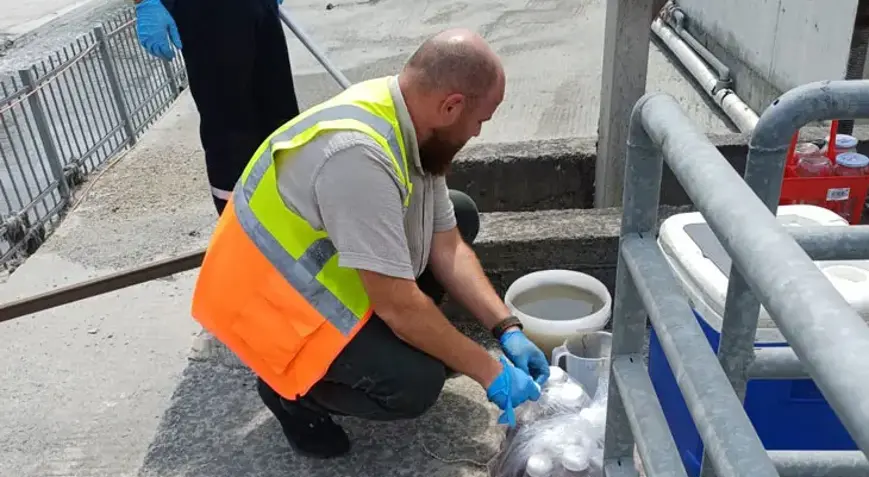
Ministry teams initiated an on-site inspection following a tip-off and images shared on social media regarding the facility in Haramidere. Four separate discharge points were identified at the facility. In the ministry's statement, it was noted that there were no flow meters on the overflow and bypass lines, that the lines were not connected to the Continuous Wastewater Monitoring System (SAİS) cabinet, and that samples taken from the bypass line showed that "wastewater was discharged directly into the receiving environment without undergoing any treatment process".
100,000 cubic meters of untreated wastewater per day
According to the Ministry's findings, an estimated 100,000 cubic meters per day of untreated wastewater is being discharged directly into the Sea of Marmara through the bypass line of the plant, which has a daily capacity of 400,000 cubic meters. The Ministry identified the root cause of the pollution as "the insufficient capacity of the wastewater treatment plant."
The same plant was fined TRY 3,343,000 on May 26, 2025, and TRY 6,687,000 on January 16, 2026. The fact that the penalty has recurred over 15 months, growing by an average of 70%, shows that the capacity-related structural problem cannot be resolved through administrative fines.
From the ministry report: "According to the analysis results of samples taken from the bypass line, it was determined that wastewater was discharged directly into the receiving environment without undergoing any treatment process."
The problem repeats without capacity increase
According to experts, the growth of the population around the Marmara region and the industrial load have exceeded the nominal capacity of the existing biological treatment plants. Conventional activated sludge processes operate efficiently up to a certain hydraulic load; when this threshold is exceeded, either the system is shut down or the bypass line is opened by the operator. In both scenarios, the receiving environment — that is, the sea — directly receives most of the waste load.
Short-term solution recommendations include constructing an additional treatment module, deploying a temporary unit, and reducing the hydraulic load on the line through rapid disposal of sewage sludge.
Conventional Bypass Approach and Domestic Carbonizing Drying Technology
The key differences between the reactor-top carbonized drying systems developed by Stinga Enerji to reduce the hydraulic load of treatment plants and the conventional approach are summarized in the table below.
| Criterion | Conventional Activated Sludge Process | Carbonizing Drying Integrated System |
|---|---|---|
| Excess hydraulic load | A bypass line is opened, raw wastewater is discharged | With reactor-top drying, sludge is disposed of quickly and the line is relieved |
| Sewage sludge volume | High — storage and transportation burden | 80%–90% volume reduction |
| Emissions | Volatile organic emissions in the combustion plant | Oxygen-free environment — near-zero volatile emissions |
| Energy | Additional fuel is required for disposal | The carbonized product is given to cement plants as alternative fuel |
| Receiving environment impact | Risk of discharge into the sea in case of crisis | The need for discharge into the sea is eliminated |
| Certification | Standard | TÜBİTAK, ENKA Laboratory, TKİ reports |
Stinga Enerji A.Ş. has been conducting R&D for 18 years in waste heat and sewage sludge disposal with its domestically developed technology, which has patent registrations in 134 countries.