



Stinga — Double-Deck Sewage Sludge Drying System
HIGHEST CAPACITY10,000 KG / HOUR
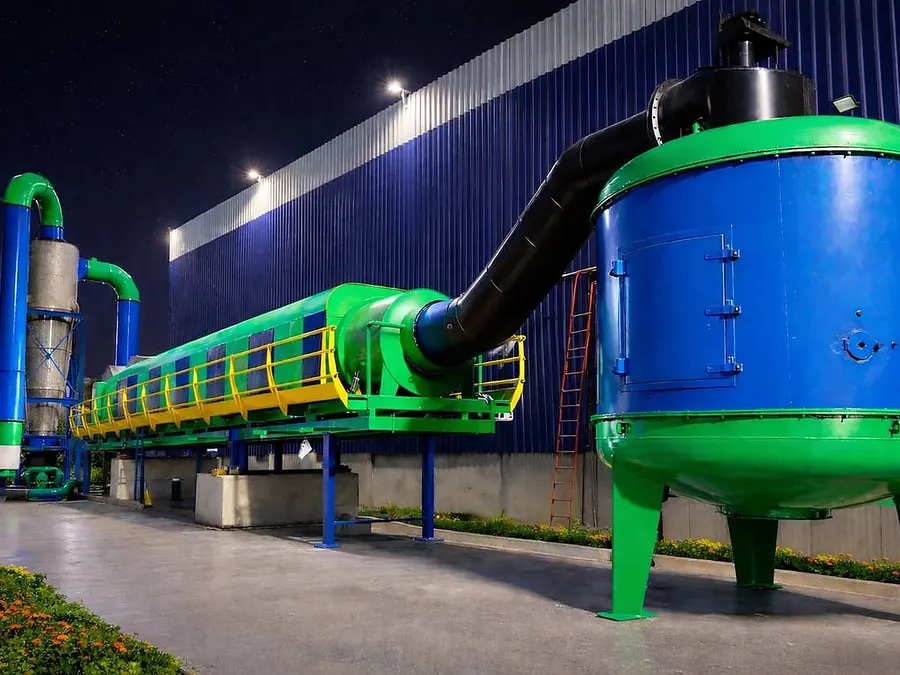
Designed for large-scale municipal wastewater treatment plants, the flagship sewage sludge drying system with a double-deck architecture that delivers maximum efficiency.
From sewage sludge to biofuel
Four machines, one raw material: sewage sludge
Single-deck, double-deck, Q1500 and the activated carbon unit are operating on the same site. The two films tell the same facility from two different angles: one follows a day from dawn to dusk, the other a night while the city sleeps.
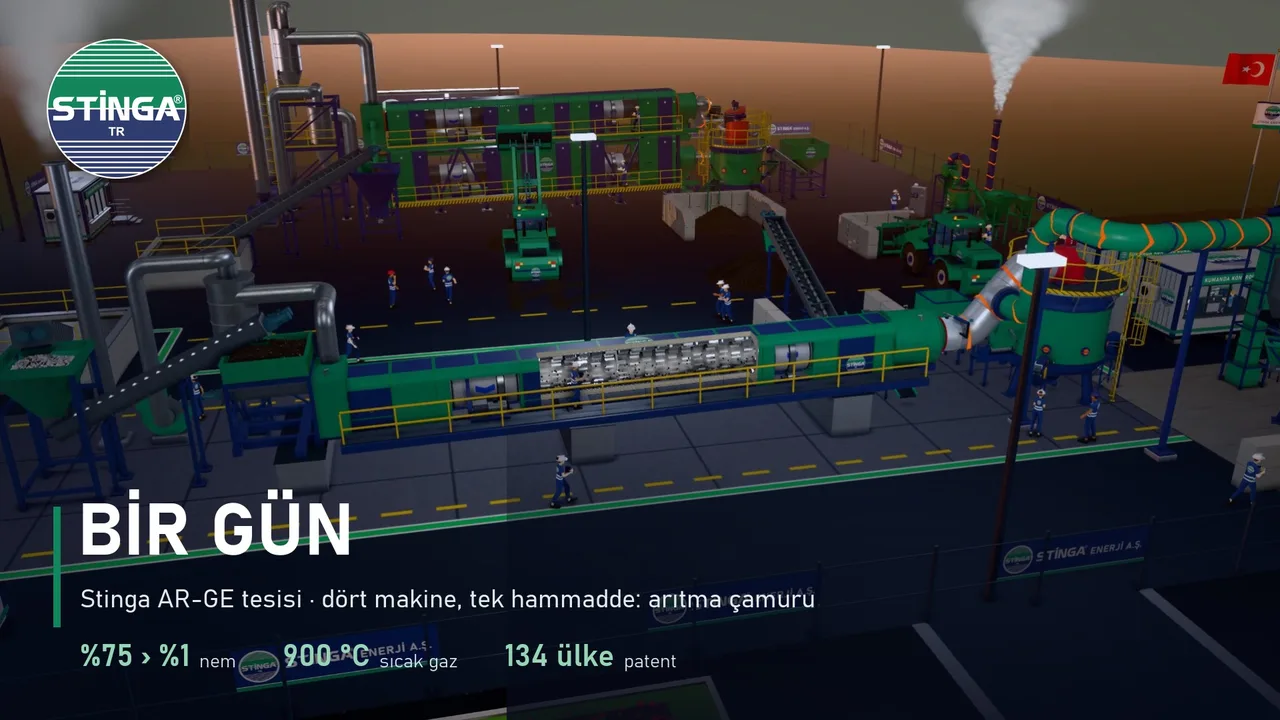 4:17
ONE DAY 4 min 17 sec
From dawn to dusk, each machine one by one: ground and aerial shots, SCADA screens in the control room, and field cameras.
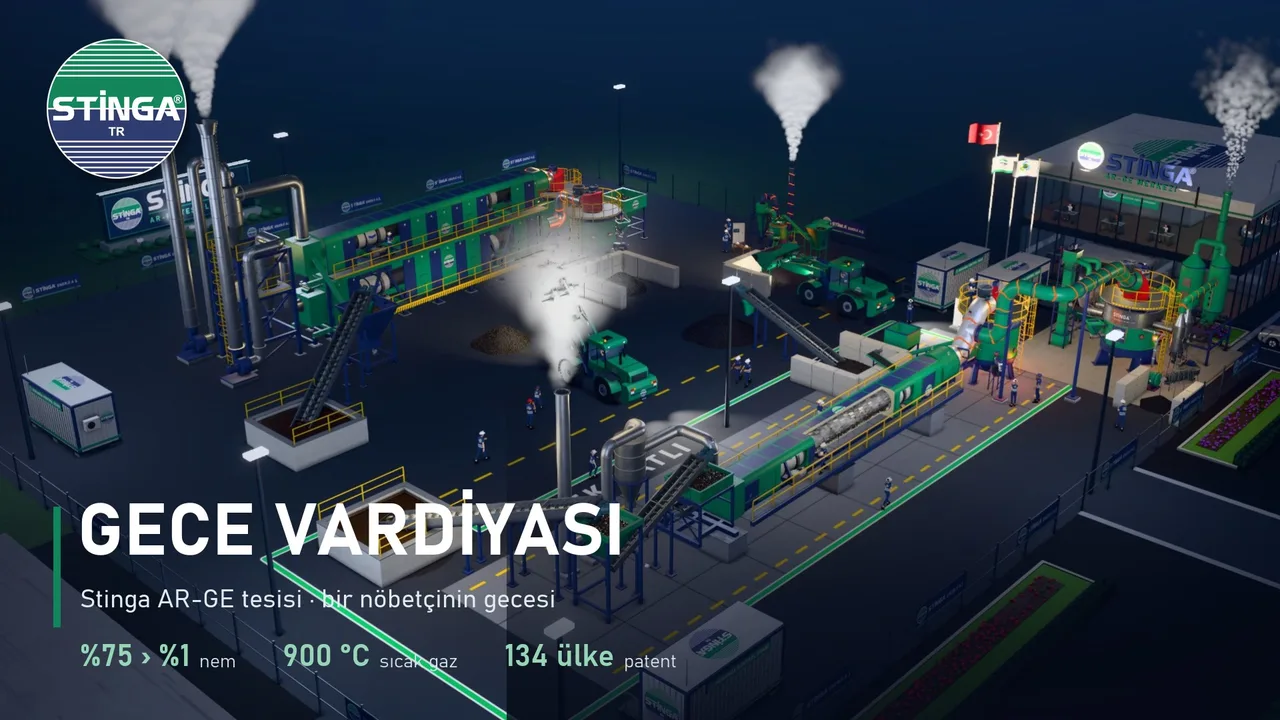 3:10
NIGHT SHIFT 3 min 10 sec
Through the eyes of a guard from dusk to dawn: the reactor’s fire, rotary kiln, loaders, and a night with no waste left by morning.
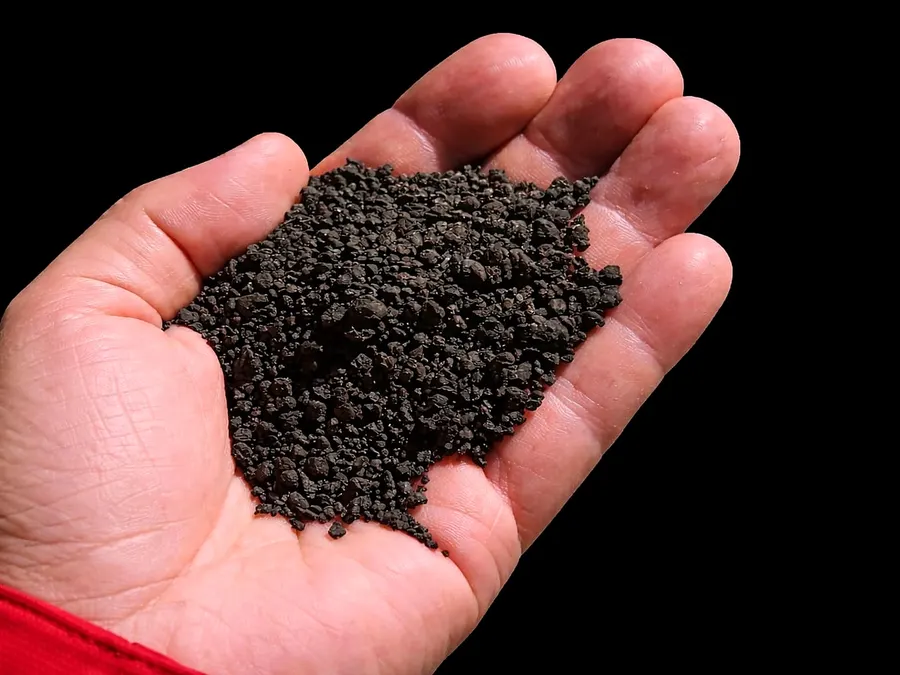
⚡ Fuel Selection and Capacity Relationship
The nominal operating capacities of our systems have been optimized for the use of externally sourced fuel with a value of 6,000 kcal/kg. When fuels with this calorific value are used, our machines operate at the committed maximum efficiency rates.
🔄 Use of Self-Produced Fuel (Recovery)
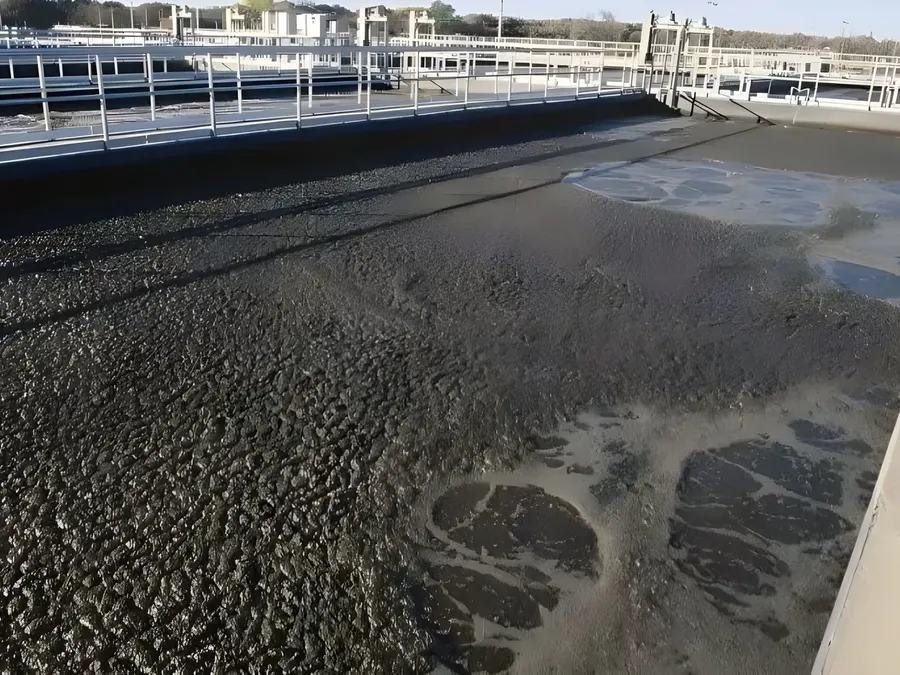
When the system uses the sewage sludge it has dried itself as fuel, the hourly consumption increases because the fuel’s calorific value is low. For example; while a drying capacity of 10,000 kg per hour in the double-deck system with 6,000 kcal fuel is achieved, using low-calorific sewage sludge reduces this capacity to 7,000 kg per hour. In terms of operational efficiency and high output rate, this method is not recommended by Stinga.
🏭 High-Value Biofuel (RDF) for Cement Plants
Stinga drying technology completes the "100% disposal" and "economic value" cycle in waste management as follows:


🌍 Sustainability and Carbon Footprint
🏛️ Municipal Sewage Sludge Disposal Savings (Savings Analysis)
Metropolitan municipalities and organized industrial zones pay companies with landfill disposal permits an average of 150 EUR per ton for the disposal of high-moisture sewage sludge. Thanks to the high processing capacity of the Stinga system, this cost turns directly into profit.
| Item | Daily | Monthly | Annual |
|---|---|---|---|
| Loading... | |||
📊 Gross Profit Calculation
⚖️ Cost Comparison with Natural Gas
How much would you pay if you used natural gas for the same 10,000 kg/hour drying process?
📐 Required Installation Area for the Plant
The required plant area for the Double-Deck system is summarized below. The area must be open space, and the ground must be prepared as project-appropriate concrete.
Featured Features
Why Double-Deck?
Double Efficiency, Same Area
The double-deck architecture offers twice the capacity compared to single-deck systems in the same facility area.
For Metropolitan Municipalities, Municipalities, and Organized Industrial Zones
We meet all capacity needs of ASKİ, İSKİ, large and small municipalities, and industrial zones. We manufacture and position systems tailored to each plant's needs.
Disposal Cost Turns into Revenue
Sewage sludge disposal paid at 150 EUR per ton turns directly into profit with the Stinga system. Not waste, but a source of income.
Near-Zero Emissions
Measured values approved by ENKA Lab: CO 12 ppm · NOₓ 3 ppm · SO₂ ≈0 ppm · CO₂ 0.4% · O₂ 6%. Operates well below EU emission limits.
70%+ Volume Reduction
70% of the moisture is removed, and biofuel with 5% moisture and a thermal value of 3,500 kcal/kg is obtained. Cement plants use this fuel to achieve 100% disposal of waste.
134 Country Patent
Stinga technology is registered in 134 countries — industrial assurance and legal durability.
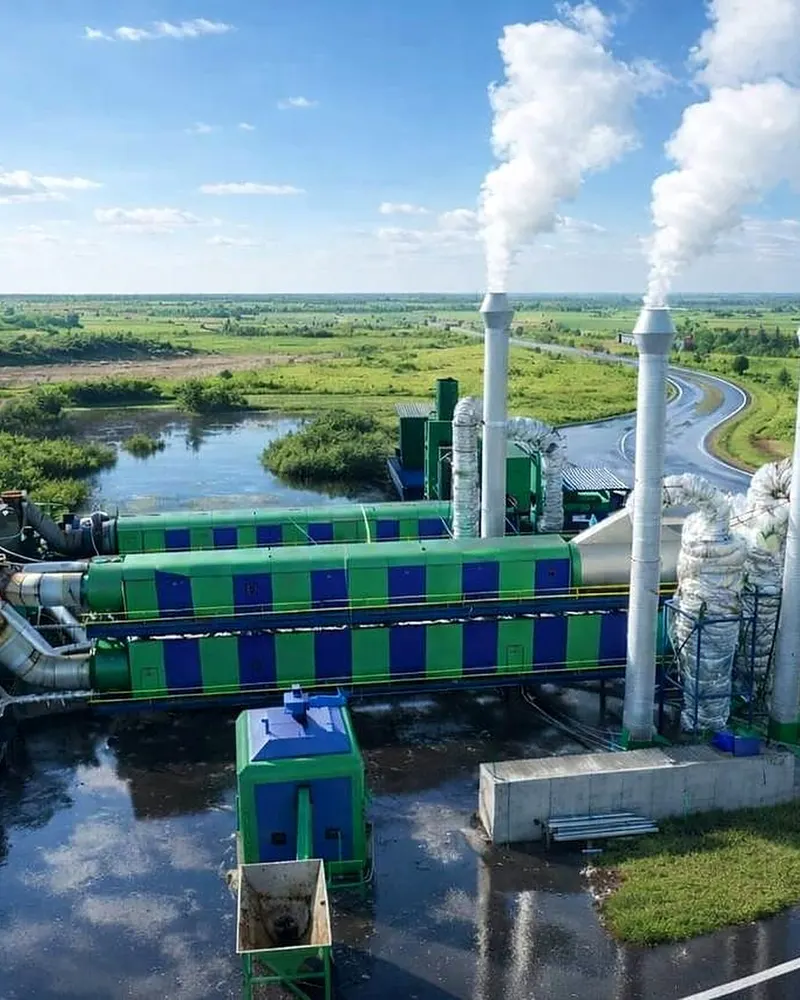 Double-Deck10,000 kg/hour
Media Gallery
Photo & Video
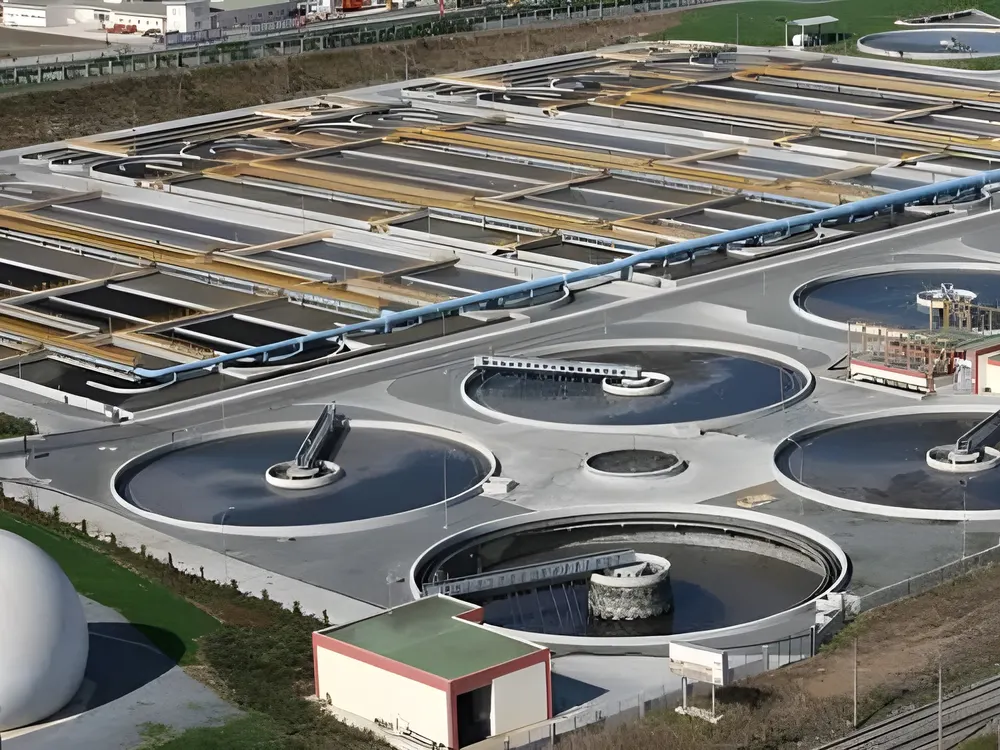 Municipal population × 0.25 kg/dayDaily wet sludge
Based on TÜİK 2024 Data — Calculated by Population
Daily Sewage Sludge Generated in Türkiye
Daily wet sludge production estimate by province and the recommended Stinga system.
* Calculation: Municipal population × 0.25 kg/day → Daily wet sludge (tons). Actual values may vary by ±30% depending on plant type and population.
| # | PROVINCE | INSTITUTION | POPULATION (2024) | DAILY WET SLUDGE (ton) | 24H CAPACITY (kg/h) | RECOMMENDED SYSTEM | PIECE |
|---|
Total 0 province/municipality shown.
We Are Experts in Sewage Sludge.
Other Industries Also Prefer Us.
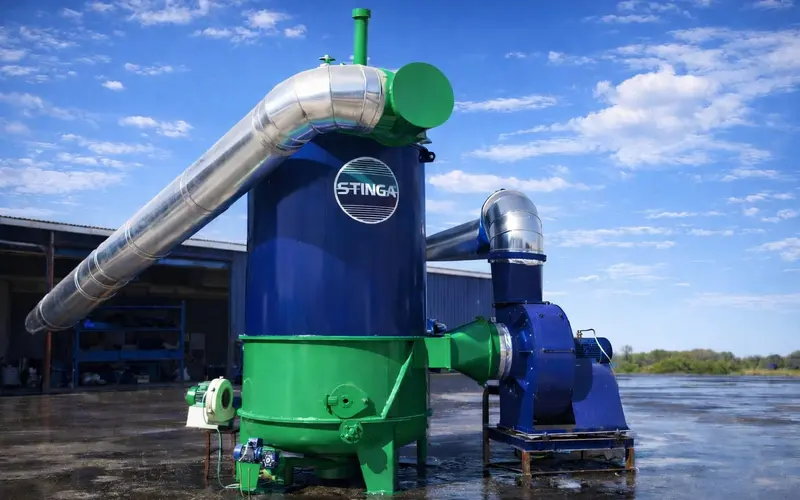
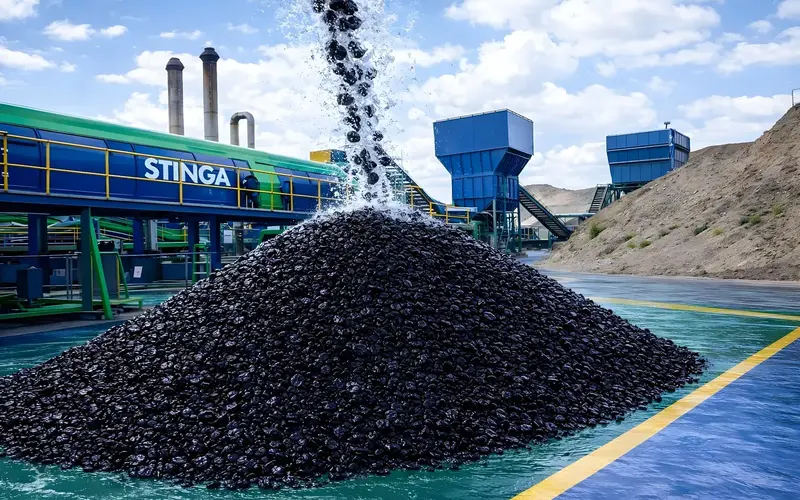 Mining Sector
Coal Drying Systems
Reduce coal with 55% moisture below inherent moisture. Maximize your sales value and calorific efficiency with permanent drying technology.
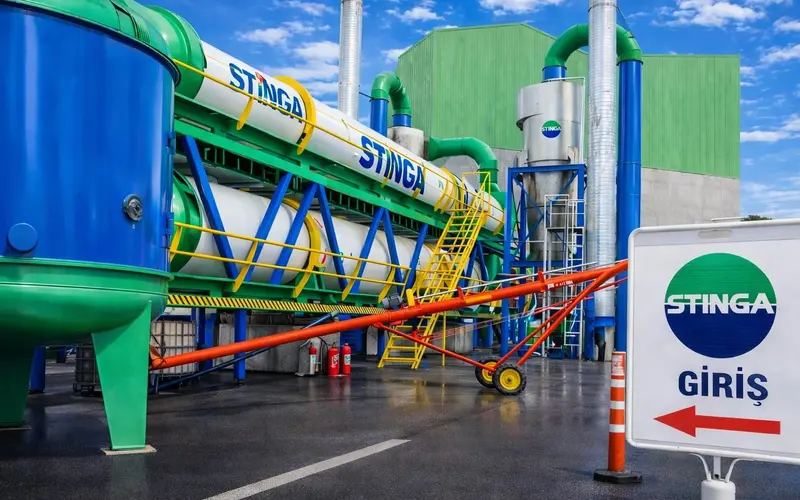
 Poultry Sector
Poultry Systems
Litter disposal and poultry house heating solutions. A fully integrated system that turns waste into revenue and energy into savings.
 Industrial Mineral
Bentonite Drying Systems
We reduce raw bentonite from the mine with 30% moisture to 10%. A product ready for crushing, screening, and cat litter packaging.
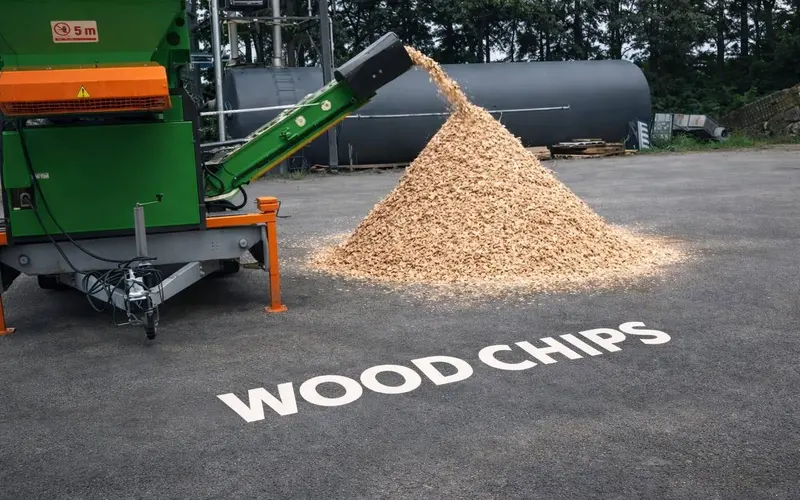 Biomass
Wood Chips Drying Systems
It dries pine wood chips with 55% moisture down to 5%. Convert wet wood chips into high-value biofuel.
LET'S CALCULATE THE MAXIMUM CAPACITY FOR YOU
We prepare a custom feasibility report based on your facility's daily sludge production amount.
Stinga — Single-Deck Sewage Sludge Drying System
SINGLE-DECK SYSTEM.5,000 KG/HOUR.
A high-capacity single-deck sewage sludge drying system in which the reactor and rotary kiln operate as a single system.
⚡ Fuel Selection and Capacity Relationship
The nominal operating capacities of our systems have been optimized for the use of externally sourced fuel with a value of 6,000 kcal/kg. When fuels with this calorific value are used, our machines operate at the committed maximum efficiency rates.
🔄 Use of Self-Produced Fuel (Recovery)
When the system uses the sewage sludge it has dried itself as fuel, the hourly consumption increases because the fuel’s calorific value is low. For example; while a drying capacity of 5,000 kg per hour in the single-deck system with 6,000 kcal fuel is achieved, using low-calorific sewage sludge reduces this capacity to 3,500 kg per hour. In terms of operational efficiency and high output rate, this method is not recommended by Stinga.
🏭 High-Value Biofuel (RDF) for Cement Plants
Stinga drying technology completes the "100% disposal" and "economic value" cycle in waste management as follows:
🌍 Sustainability and Carbon Footprint
💰 Biofuel Revenue Summary (Single-Deck System — 5,000 kg/h)
With a capacity of 5 ton/h per hour, 36 tons/24h of biofuel is produced per day from the remaining 30% after drying. Selling value per ton: 41 EUR (2026 reference)
⚖️ Cost Comparison with Natural Gas
How much would you pay if you used natural gas for the same 5,000 kg/hour drying process?
🏛️ Municipal Sewage Sludge Disposal Savings (Savings Analysis)
Metropolitan municipalities and organized industrial zones pay companies with landfill disposal permits an average of 150 EUR per ton for the disposal of high-moisture sewage sludge. Thanks to the processing capacity of the Stinga system, this cost turns entirely into direct profit.
| Item | Daily | Monthly | Annual |
|---|---|---|---|
| Loading... | |||
📊 Gross Profit Calculation — Net Table After Expenses Deducted
When personnel, fuel, and electricity costs are deducted from biofuel sales revenue, the actual gross profit emerges. TL cells are calculated instantly with the live EUR exchange rate.
📐 Required Installation Area for the Plant
The required plant area for the Single-Deck system is summarized below. The area must be open space, and the ground must be prepared as project-appropriate concrete.
Featured Features
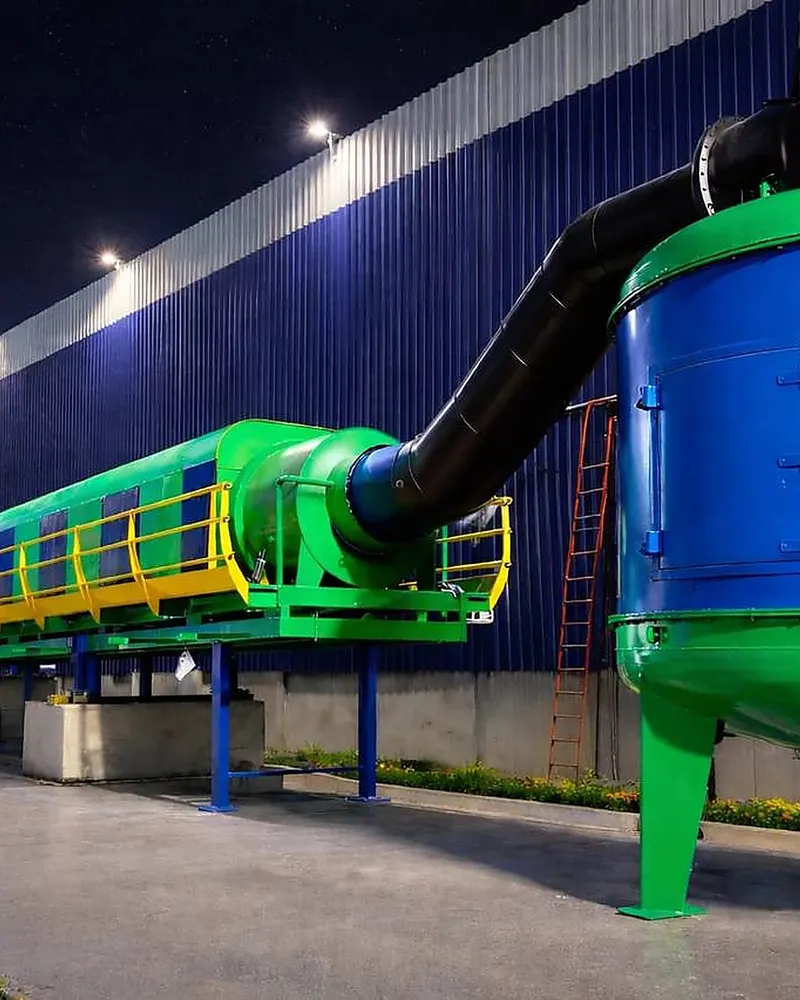
The Power of the Single-Deck System
Single System
The reactor and rotary kiln operate as a single system.
Rapid Commissioning
It is installed on-site and starts operation with minimum preparation time.
Investment Optimization
One system for multiple facilities — spreads capital cost.
Autocritical Energy Cycle
The produced biofuel powers the system; dependence on external energy ends after the first ignition.
70%+ Volume Reduction
70% of the moisture is removed, and biofuel with 5% moisture and a thermal value of 3,500 kcal/kg is obtained. Cement plants use this fuel to achieve 100% disposal of waste.
134 Country Patent
Stinga technology is registered in 134 countries — industrial assurance and legal durability.
 Single-deck5,000 kg/hour
Media Gallery
Photo & Video
Municipal population × 0.25 kg/dayDaily wet sludgeBased on TÜİK 2024 Data — Calculated by Population
Daily Sewage Sludge Generated in Türkiye
Daily wet sludge production estimate by province and the recommended Stinga system.
* Calculation: Municipal population × 0.25 kg/day → Daily wet sludge (tons). Actual values may vary by ±30% depending on plant type and population.
| # | PROVINCE | INSTITUTION | POPULATION (2024) | DAILY WET SLUDGE (ton) | 24H CAPACITY (kg/h) | RECOMMENDED SYSTEM | PIECE |
|---|
Total 0 province/municipality shown.
We Are Experts in Sewage Sludge.
Other Industries Also Prefer Us.
Mining SectorCoal Drying Systems
Reduce coal with 55% moisture below inherent moisture. Maximize your sales value and calorific efficiency with permanent drying technology.
Poultry SectorPoultry Systems
Litter disposal and poultry house heating solutions. A fully integrated system that turns waste into revenue and energy into savings.
Industrial MineralBentonite Drying Systems
We reduce raw bentonite from the mine with 30% moisture to 10%. A product ready for crushing, screening, and cat litter packaging.
BiomassWood Chips Drying Systems
It dries pine wood chips with 55% moisture down to 5%. Convert wet wood chips into high-value biofuel.
PLAN THE SINGLE-DECK SYSTEM YOUR WAY
Determine how many facilities you will serve and how often — let us prepare a custom usage plan for you.
Stinga Ø3400 — Reactor-Top Sewage Sludge Drying System
HIGH CAPACITY.COMPACT STRUCTURE. 3,500 KG/H.
A powerful reactor-top sewage sludge drying system for medium- and large-scale municipal and industrial facilities.
⚡ Fuel Selection and Capacity Relationship
The nominal operating capacities of our systems have been optimized for the use of externally sourced fuel with a value of 6,000 kcal/kg. When fuels with this calorific value are used, our machines operate at the committed maximum efficiency rates.
🔄 Use of Self-Produced Fuel (Recovery)
When the system uses the sewage sludge it has dried itself as fuel, the hourly consumption increases because the fuel’s calorific value is low. For example; while a drying capacity of 3,500 kg per hour in the Ø3400 system with 6,000 kcal fuel is achieved, using low-calorific sewage sludge reduces this capacity to 2,450 kg per hour. In terms of operational efficiency and high output rate, this method is not recommended by Stinga.
🏭 High-Value Biofuel (RDF) for Cement Plants
Stinga drying technology completes the "100% disposal" and "economic value" cycle in waste management as follows:
🌍 Sustainability and Carbon Footprint
💰 Biofuel Revenue Summary (Ø3400 Reactor — 3,500 kg/h)
With a capacity of 3.5 ton/h per hour, 25.2 tons/24h of biofuel is produced per day from the remaining 30% after drying. Selling value per ton: 41 EUR (2026 reference)
⚖️ Cost Comparison with Natural Gas
How much would you pay if you used natural gas for the same 3,500 kg/hour drying process?
🏛️ Municipal Sewage Sludge Disposal Savings (Savings Analysis)
Metropolitan municipalities and organized industrial zones pay companies with landfill disposal permits an average of 150 EUR per ton for the disposal of high-moisture sewage sludge. Thanks to the processing capacity of the Stinga system, this cost turns entirely into direct profit.
| Item | Daily | Monthly | Annual |
|---|---|---|---|
| Loading... | |||
📊 Gross Profit Calculation — Net Table After Expenses Deducted
When personnel, fuel, and electricity costs are deducted from biofuel sales revenue, the actual gross profit emerges. TL cells are calculated instantly with the live EUR exchange rate.
📐 Required Installation Area for the Plant
The required plant area for the Ø3400 Reactor-Top system is summarized below. The area must be open space, and the ground must be prepared as project-appropriate concrete.
Featured Features
Power and Compactness Together
High Processing Capacity
With a capacity of 3,500 kg/hour, 84 tons of wet sludge are processed per day.
Reactor-Top Integration
Installed on top of the existing reactor — no additional structure construction required.
Autocritical Energy Cycle
The produced biofuel powers the system; dependence on external energy ends after the first ignition.
Near-Zero Emissions
Measured values approved by ENKA Lab: CO 12 ppm · NOₓ 3 ppm · SO₂ ≈0 ppm · CO₂ 0.4% · O₂ 6%. Operates well below EU emission limits.
70%+ Volume Reduction
70% of the moisture is removed, and biofuel with 5% moisture and a thermal value of 3,500 kcal/kg is obtained. Cement plants use this fuel to achieve 100% disposal of waste.
134 Country Patent
Stinga technology is registered in 134 countries — industrial assurance and legal durability.
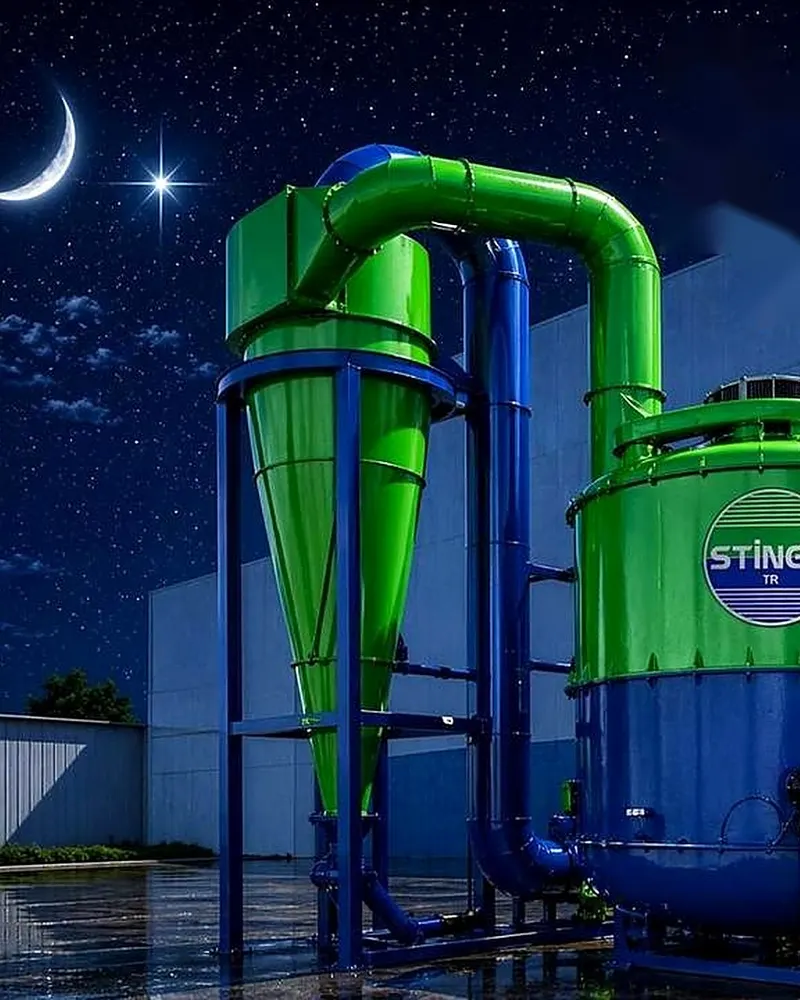 Ø3400 Reactor-Top3,500 kg/hour
Media Gallery
Photo & Video
Municipal population × 0.25 kg/dayDaily wet sludgeBased on TÜİK 2024 Data — Calculated by Population
Daily Sewage Sludge Generated in Türkiye
Daily wet sludge production estimate by province and the recommended Stinga system.
* Calculation: Municipal population × 0.25 kg/day → Daily wet sludge (tons). Actual values may vary by ±30% depending on plant type and population.
| # | PROVINCE | INSTITUTION | POPULATION (2024) | DAILY WET SLUDGE (ton) | 24H CAPACITY (kg/h) | RECOMMENDED SYSTEM | PIECE |
|---|
Total 0 province/municipality shown.
We Are Experts in Sewage Sludge.
Other Industries Also Prefer Us.
Mining SectorCoal Drying Systems
Reduce coal with 55% moisture below inherent moisture. Maximize your sales value and calorific efficiency with permanent drying technology.
Poultry SectorPoultry Systems
Litter disposal and poultry house heating solutions. A fully integrated system that turns waste into revenue and energy into savings.
Industrial MineralBentonite Drying Systems
We reduce raw bentonite from the mine with 30% moisture to 10%. A product ready for crushing, screening, and cat litter packaging.
BiomassWood Chips Drying Systems
It dries pine wood chips with 55% moisture down to 5%. Convert wet wood chips into high-value biofuel.
LET'S FIND THE RIGHT SOLUTION FOR YOUR PLANT TOGETHER
We prepare a free feasibility analysis based on your daily sludge production amount.
Stinga Ø2600 — Reactor-Top Sewage Sludge Drying System
MEDIUM SCALE.MAXIMUM CAPACITY. 2,000 KG/H.
A reactor-top sewage sludge drying system that offers balanced power and cost advantages for medium-sized municipal and industrial wastewater treatment plants.
⚡ Fuel Selection and Capacity Relationship
The nominal operating capacities of our systems have been optimized for the use of externally sourced fuel with a value of 6,000 kcal/kg. When fuels with this calorific value are used, our machines operate at the committed maximum efficiency rates.
🔄 Use of Self-Produced Fuel (Recovery)
When the system uses the sewage sludge it has dried itself as fuel, the hourly consumption increases because the fuel’s calorific value is low. For example; while a drying capacity of 2,000 kg per hour in the Ø2600 system with 6,000 kcal fuel is achieved, using low-calorific sewage sludge reduces this capacity to 1,400 kg per hour. In terms of operational efficiency and high output rate, this method is not recommended by Stinga.
🏭 High-Value Biofuel (RDF) for Cement Plants
Stinga drying technology completes the "100% disposal" and "economic value" cycle in waste management as follows:
🌍 Sustainability and Carbon Footprint
💰 Biofuel Revenue Summary (Ø2600 Reactor — 2,000 kg/h)
With a capacity of 2 ton/h per hour, 14.4 tons/24h of biofuel is produced per day from the remaining 30% after drying. Selling value per ton: 41 EUR (2026 reference)
⚖️ Cost Comparison with Natural Gas
How much would you pay if you used natural gas for the same 2,000 kg/hour drying process?
🏛️ Municipal Sewage Sludge Disposal Savings (Savings Analysis)
Metropolitan municipalities and organized industrial zones pay companies with landfill disposal permits an average of 150 EUR per ton for the disposal of high-moisture sewage sludge. Thanks to the processing capacity of the Stinga system, this cost turns entirely into direct profit.
| Item | Daily | Monthly | Annual |
|---|---|---|---|
| Loading... | |||
📊 Gross Profit Calculation — Net Table After Expenses Deducted
When personnel, fuel, and electricity costs are deducted from biofuel sales revenue, the actual gross profit emerges. TL cells are calculated instantly with the live EUR exchange rate.
📐 Required Installation Area for the Plant
The required plant area for the Ø2600 Reactor-Top system is summarized below. The area must be open space, and the ground must be prepared as project-appropriate concrete.
Featured Features
Balanced Power, Efficient Cost
Optimum Capacity
2,000 kg/hour and 48 tons per day — ideal balance for medium-sized facilities.
Fuel Efficiency
With fuel consumption of 80 kg/hour, the most competitive disposal cost per ton.
Reactor-Top Integration
Installed on top of the existing reactor — no additional structure construction required.
Autocritical Energy Cycle
The produced biofuel powers the system; dependence on external energy ends after the first ignition.
70%+ Volume Reduction
70% of the moisture is removed, and biofuel with 5% moisture and a thermal value of 3,500 kcal/kg is obtained. Cement plants use this fuel to achieve 100% disposal of waste.
134 Country Patent
Stinga technology is registered in 134 countries — industrial assurance and legal durability.
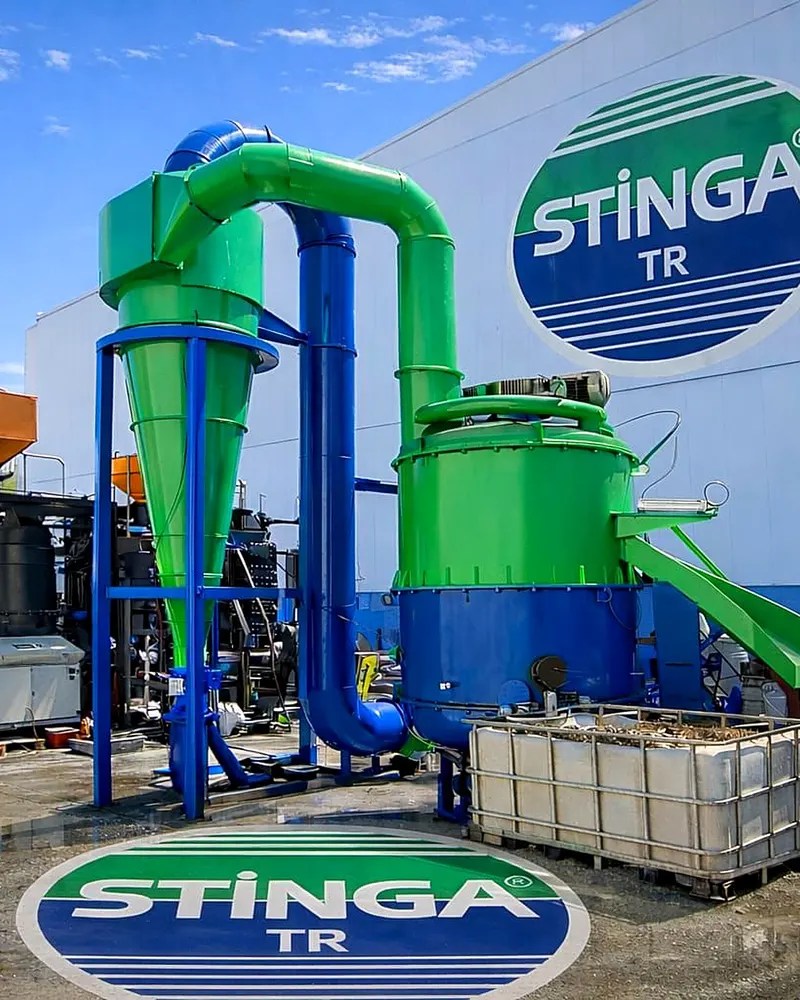 Ø2600 Reactor-Top2,000 kg/hour
Media Gallery
Photo & Video
Municipal population × 0.25 kg/dayDaily wet sludgeBased on TÜİK 2024 Data — Calculated by Population
Daily Sewage Sludge Generated in Türkiye
Daily wet sludge production estimate by province and the recommended Stinga system.
* Calculation: Municipal population × 0.25 kg/day → Daily wet sludge (tons). Actual values may vary by ±30% depending on plant type and population.
| # | PROVINCE | INSTITUTION | POPULATION (2024) | DAILY WET SLUDGE (ton) | 24H CAPACITY (kg/h) | RECOMMENDED SYSTEM | PIECE |
|---|
Total 0 province/municipality shown.
We Are Experts in Sewage Sludge.
Other Industries Also Prefer Us.
Mining SectorCoal Drying Systems
Reduce coal with 55% moisture below inherent moisture. Maximize your sales value and calorific efficiency with permanent drying technology.
Poultry SectorPoultry Systems
Litter disposal and poultry house heating solutions. A fully integrated system that turns waste into revenue and energy into savings.
Industrial MineralBentonite Drying Systems
We reduce raw bentonite from the mine with 30% moisture to 10%. A product ready for crushing, screening, and cat litter packaging.
BiomassWood Chips Drying Systems
It dries pine wood chips with 55% moisture down to 5%. Convert wet wood chips into high-value biofuel.
LET US INTRODUCE YOUR PLANT TO THIS SYSTEM
We prepare a free feasibility analysis for integration into your existing treatment plant.
Stinga Ø1500 — Reactor-Top Sewage Sludge Drying System
FOR SMALL AREA.BIG SOLUTION. 500 KG/H.
A compact, entry-level reactor-top sewage sludge drying system for small and medium-sized wastewater treatment plants.
⚡ Fuel Selection and Capacity Relationship
The nominal operating capacities of our systems have been optimized for the use of externally sourced fuel with a value of 6,000 kcal/kg. When fuels with this calorific value are used, our machines operate at the committed maximum efficiency rates.
🔄 Use of Self-Produced Fuel (Recovery)
If the system uses the sewage sludge it dries itself as fuel, the hourly consumption increases because the fuel's calorific value is low. For example; while 500 kg per hour in the Ø1500 system with 6,000 kcal fuel can be reached, using low-calorific sewage sludge reduces this capacity to 350 kg per hour. From the perspective of operational efficiency and high output speed, this method is not recommended by Stinga.
🏭 High-Value Biofuel (RDF) for Cement Plants
Stinga drying technology completes the "100% disposal" and "economic value" cycle in waste management as follows:
🌍 Sustainability and Carbon Footprint
💰 Biofuel Revenue Summary (Ø1500 Reactor — 500 kg/h)
With a capacity of 0.5 ton/h per hour, 3.6 tons/24h of biofuel is produced per day from the remaining 30% after drying. Selling value per ton: 41 EUR (2026 reference)
⚖️ Cost Comparison with Natural Gas
How much would you pay if you used natural gas for the same 500 kg/hour drying process?
🏛️ Municipal Sewage Sludge Disposal Savings (Savings Analysis)
Metropolitan municipalities and organized industrial zones pay companies with landfill disposal permits an average of 150 EUR per ton for the disposal of high-moisture sewage sludge. Thanks to the processing capacity of the Stinga system, this cost turns entirely into direct profit.
| Item | Daily | Monthly | Annual |
|---|---|---|---|
| Loading... | |||
📊 Gross Profit Calculation — Net Table After Expenses Deducted
When personnel, fuel, and electricity costs are deducted from biofuel sales revenue, the actual gross profit emerges. TL cells are calculated instantly with the live EUR exchange rate.
📐 Required Installation Area for the Plant
The required plant area for the Ø1500 Reactor-Top system is summarized below. The area must be open space, and the ground must be prepared as project-appropriate concrete.
Featured Features
Small Scale, High Efficiency
Compact Design
Easily integrated into small facilities with minimum space requirements.
Low Initial Cost
The most economical member of the Stinga product family — low initial investment.
Low Electricity Consumption
Highly economical operation with only 6.8 kW of power consumption.
Autocritical Energy Cycle
The produced biofuel powers the system; dependence on external energy ends after the first ignition.
Scalable
Option to transition to a higher model in the future — aligns with your growth plan.
134 Country Patent
Stinga technology is registered in 134 countries — industrial assurance and legal durability.
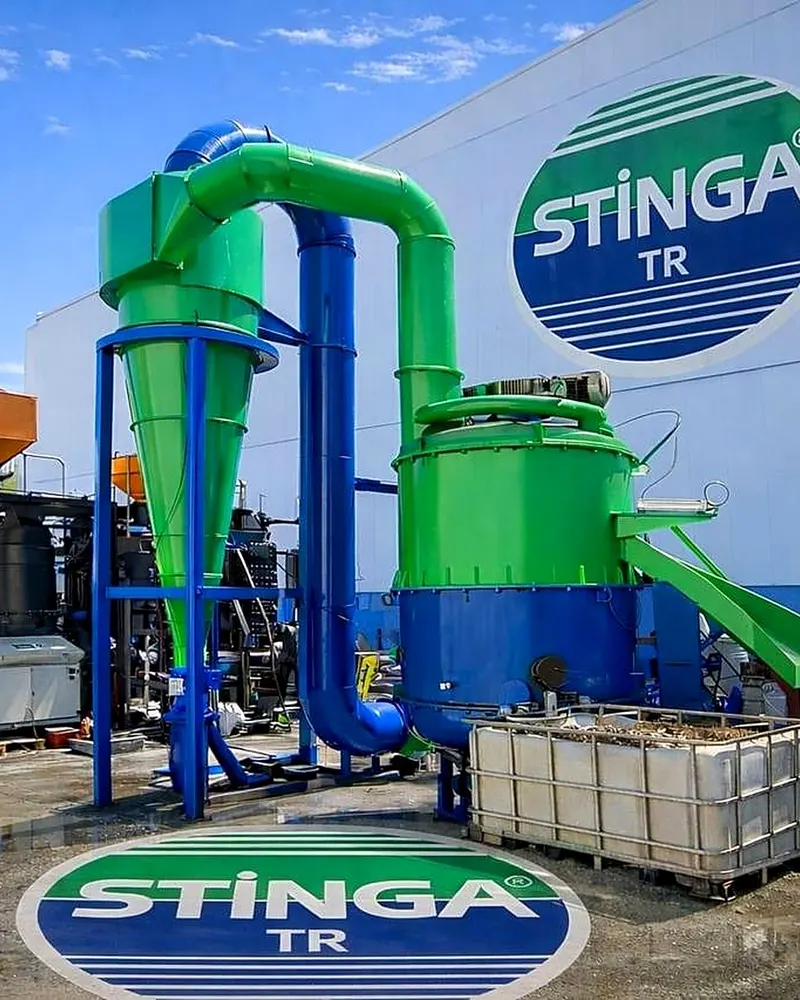 Ø1500 Reactor-Top500 kg/hour
Media Gallery
Photo & Video
Municipal population × 0.25 kg/dayDaily wet sludgeBased on TÜİK 2024 Data — Calculated by Population
Daily Sewage Sludge Generated in Türkiye
Daily wet sludge production estimate by province and the recommended Stinga system.
* Calculation: Municipal population × 0.25 kg/day → Daily wet sludge (tons). Actual values may vary by ±30% depending on plant type and population.
| # | PROVINCE | INSTITUTION | POPULATION (2024) | DAILY WET SLUDGE (ton) | 24H CAPACITY (kg/h) | RECOMMENDED SYSTEM | PIECE |
|---|
Total 0 province/municipality shown.
We Are Experts in Sewage Sludge.
Other Industries Also Prefer Us.
Mining SectorCoal Drying Systems
Reduce coal with 55% moisture below inherent moisture. Maximize your sales value and calorific efficiency with permanent drying technology.
Poultry SectorPoultry Systems
Litter disposal and poultry house heating solutions. A fully integrated system that turns waste into revenue and energy into savings.
Industrial MineralBentonite Drying Systems
We reduce raw bentonite from the mine with 30% moisture to 10%. A product ready for crushing, screening, and cat litter packaging.
BiomassWood Chips Drying Systems
It dries pine wood chips with 55% moisture down to 5%. Convert wet wood chips into high-value biofuel.
BIG SOLUTION FOR SMALL FACILITIES
Let's determine the most suitable system together based on your facility's daily sludge needs.
| Parameter | 🏭 Double-Deck 10,000 kg/h |
🏭 Single-Deck 5,000 kg/h |
⚙️ Ø3400 3,500 kg/h |
⚙️ Ø2600 2,000 kg/h |
⚙️ Ø1500 500 kg/h |
⛏️ Coal Double-Deck 30,000 kg/h |
🐔 Poultry House Heating Waste Heat |
♻️ Poultry litter 1,000 kg/h |
|---|---|---|---|---|---|---|---|---|
| 📊 CAPACITY & TECHNICAL | ||||||||
| Inlet moisture | %75 | %75 | %75 | %75 | %75 | %55 | — | %50–65 |
| Outlet moisture | %1–5 | %1–5 | %1–5 | %1–5 | %1–5 | 3% (permanent) | — | %10–15 |
| Fuel consumption | 240 kg/h | 150 kg/h | 150 kg/h | 80 kg/h | 15 kg/h | 240 kg/h | ≈ 0 EUR | 30 kg/h |
| Emissions | ≈ 0 | ≈ 0 | ≈ 0 | ≈ 0 | ≈ 0 | ≈ 0 | Zero additional | ≈ 0 |
| Installation Type | Fixed | Single-Deck 🏭 | Reactor-Top | Reactor-Top | Reactor-Top | Fixed / Single-Deck | Integration | Reactor-Top |
| 💰 REVENUE & SAVINGS | ||||||||
| Biofuel (RDF) Revenue | ✔ | ✔ | ✔ | ✔ | ✔ | — | — | — |
| Disposal savings | 150 EUR/ton | 150 EUR/ton | 150 EUR/ton | 150 EUR/ton | 150 EUR/ton | — | 70% savings | Fertilizer Sales |
| Calorific Value Gain | — | — | — | — | — | +2,600 kcal/kg | — | — |
| 🎯 WHO IS IT FOR? | ||||||||
| Target | Large Municipality | Multi-Site OIZ | Medium Municipality | Small-medium | Small Facility | Mine, Thermal Power | Broiler operation | Poultry farm |
| 134 Country Patent | ✔ | ✔ | ✔ | ✔ | ✔ | ✔ | ✔ | ✔ |
| Calculate ROI | 📊 Make a detailed calculation on the /yatirim-hesaplayici page → | |||||||
Ambarlı File: Marmara's Bypass Crisis
The third environmental fine issued to İSKİ within 15 months and the capacity crisis in sewage sludge disposal — from four different journalistic angles.
Marmara's Sludge Burden: Three Penalties, One Root Problem, One Permanent Solution
Three administrative fines in 15 months exposed Türkiye's capacity gap in wastewater infrastructure. A comparative analysis of the conventional approach and the carbonizing drying alternative.
8.4 Million TL Fine for İSKİ: Third Sanction in the Bypass Scandal in Ambarlı
The Ministry issued the facility a third fine within 15 months. Four discharge points were identified.
Data AnalysisMarmara's Bypass Crisis in Numbers: 100 Thousand m³ of Sewage per Day
Numerical analysis of capacity, bypass flow rate, and penalty amounts.
Open LetterA Permanent Solution to the Ambarlı Crisis Is Possible with Domestic Technology
An open letter from the Board of Directors to the Ministry of Environment and İSKİ.