

Stinga — Coal Drying Systems
COAL BELOW ITS INHERENT MOISTURESINGLE-DECK DISCHARGING SYSTEM
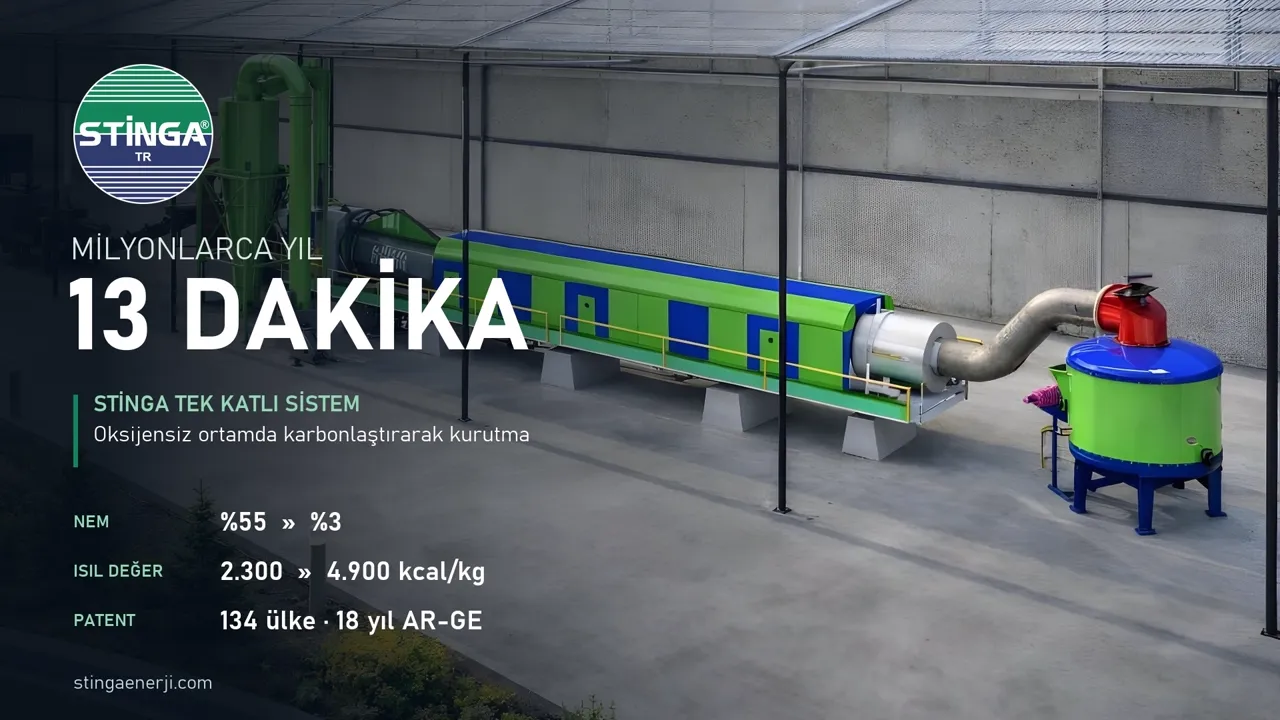
Reduces coal with 55% moisture to 3%, and we add 50 kcal of value per unit of moisture. Because it is reduced below inherent moisture, moisture does not rise again after rain and snow.
 3:03
Nature waited millions of years. We do it in 13 minutes.
The natural coalification cycle from swamp forests to Anatolian lignite is our source of inspiration. The STİNGA Single-Deck System dries and carbonizes coal in 13 minutes in an oxygen-free environment and with controlled heat.
Coal that drops below inherent moisture does not reabsorb moisture after rain or snow; it preserves the calorific value it has gained.
In Denizli Tavas
we dried the coal by carbonization
The Stinga Coal Carbonizing Drying and Upgrading Facility in Denizli / Tavas (2010) is one of the technology's field references. Today's Double-Deck and Single-Deck systems were developed on the basis of this field experience; emission values were measured in the ENKA accredited laboratory.


🔬 What Is Inherent Moisture? Why Is It Critical?
Coal's inherent moisture is the amount of water retained in the coal structure, independent of external environmental conditions (rain, snow, humidity). Conventional drying systems reduce coal to a value above inherent moisture; therefore, during storage or transport, moisture is absorbed again from the external environment. The Stinga system permanently solves this problem by reducing coal below inherent moisture (3%).
⚡ 55% → 3%: Calorific Value and Value Gain
Run-of-mine coal enters with a calorific value of 2,100 kcal/kg and 55% moisture. With Stinga, 52% moisture is removed; each unit of moisture adds 50 kcal/kg: 52 × 50 = +2,600 kcal/kg. The output calorific value reaches 2,100 + 2,600 = 4,700 kcal/kg — an increase of above 100% over the original value.
Enter your values; our expert team will prepare the calculation result and send it to you.
🏭 Difference from Competitors: Reliable Drying Assurance
💰 Value Calculation: Calorific Value Increase Above 100%
Incoming coal arrives with 2,100 kcal/kg. With Stinga, 52% moisture is removed, resulting in a gain of +2,600 kcal/kg and an output of 4,700 kcal/kg. This corresponds to an increase of above 100% of the initial calorific value. Based on TKİ April 2026 sales prices, this calorific increase directly reflects in revenue per ton.
💰 Coal Drying Gross Profit Analysis
Instead of selling wet coal, selling it after drying with Stinga: the difference between buying and selling prices creates gross profit after expenses are deducted. The chart below has been calculated with current data.


• Input moisture: 55% → Output moisture: 3% · Moisture reduction: 52% · 1 unit of moisture = 50 kcal
• Input calorific value: 2,100 kcal + 2,600 kcal gain = 4,700 kcal output (increase above 100% of original)
• Mass conversion: 1 ton run-of-mine (55% moisture) → ~0,464 ton dry (3% moisture)
• Industrial electricity: ~5,46 TL/kWh ≈ 0,122 EUR/kWh (EUR/TRY: ~44,85 · April 2026)
• Fuel cost: Self-produced dry coal is used → calculated from TKİ sales price (108 EUR/ton · April 2026)
• Month: 720 hours (30 days × 24 hours) · Year: 12 months · Gross profit excluding taxes
📐 Installation Site Requirements
The plant area required for both coal drying systems is summarized in the chart below. All areas must be open area and the ground must be prepared as project-suitable concrete.
System Comparison
Which System Should I Choose?

Featured Features
Stinga Difference in Coal Drying
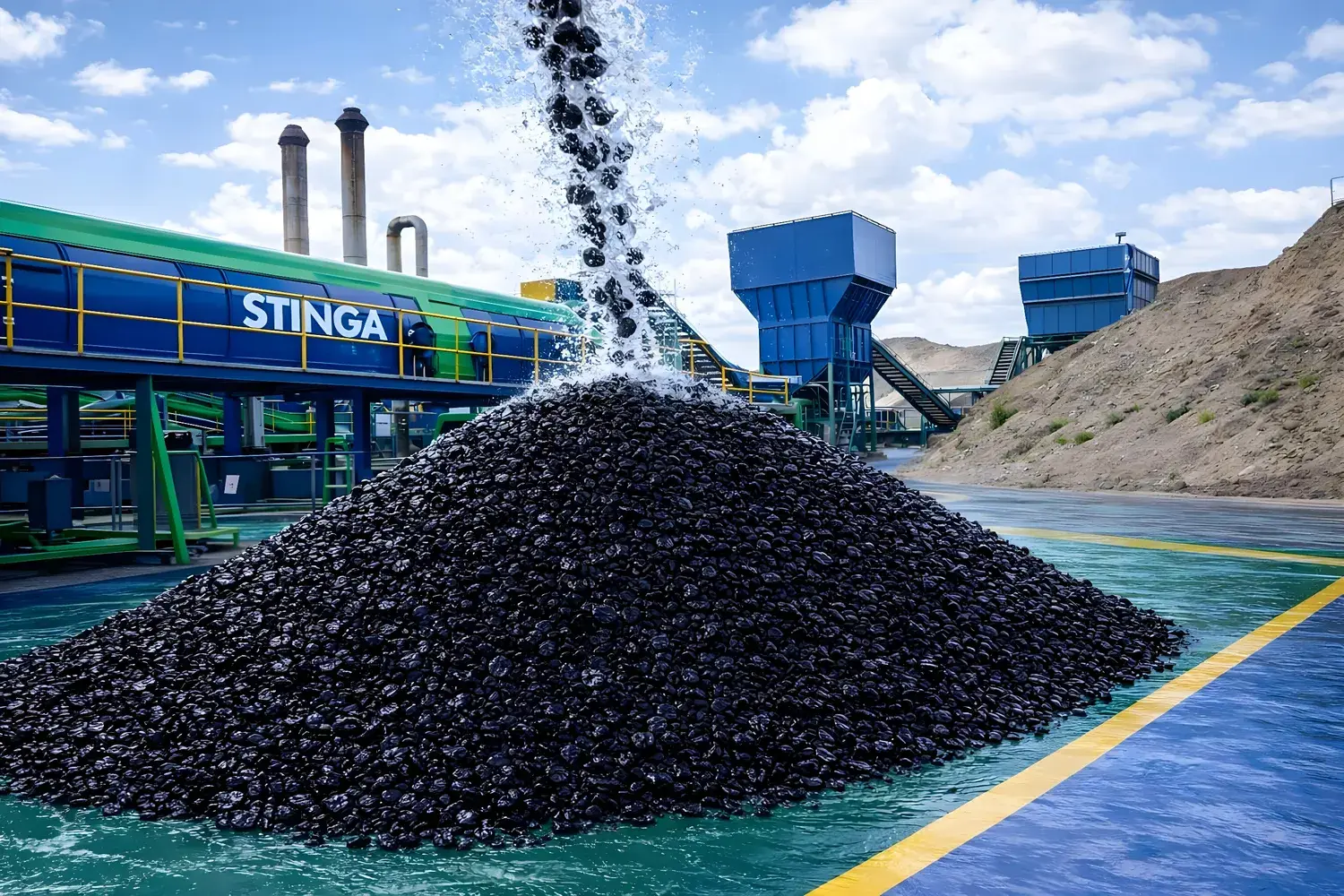
Permanent Drying Assurance
Coal that drops below inherent moisture does not reabsorb moisture even in rain and snow — its calorific value and selling price are preserved.
+2,600 kcal/kg Gain
52% moisture is removed; each unit of moisture adds 50 kcal of value: 2,100 kcal + 2,600 kcal = 4,700 kcal output. An increase above 100% of the original value.
Weight and Transportation Savings
A 52% moisture reduction significantly lowers transportation weight — transportation cost per ton decreases.
Autocritical Energy Cycle
The system can use its own dried coal as fuel; dependence on external energy decreases.
For High-Moisture Coal
Designed primarily for high-moisture coals, especially lignite; it can also be applied to hard coal and bituminous coal.
134 Country Patent
Stinga technology is registered in 134 countries — industrial assurance and legal durability.
Application Areas
Coal Drying Sectors

Coal Mines
On-site drying of wet coal coming from the mine for pre-transport calorific value and weight optimization.
Thermal Power Plants
Drying stock coal to stabilize fuel quality and improve boiler efficiency.
Cement Industry
It increases calorific value by reducing the moisture content of coal used as kiln fuel — directly lowering fuel costs in cement plants.
Industry Advantages
Sectoral Advantages of Coal Drying
By reducing coal below inherent moisture, the Stinga system provides lasting calorific value gain and cost advantage at every stage — from storage to export, from briquette production to processing plants. Output values are clarified by sample testing for each coal.

Port & Export
Bringing it to the moisture standard before export — meeting the calorific value requirements of the buyer country.
Briquetting & Processing
Raw material moisture standardization in briquette production and coal processing plants — homogeneous and high-quality product output.
Different Coal Types
It can be applied to different coal types, especially lignite; output values are clarified by sample testing.
Coal Stockyards
Preventing moisture increase during storage to preserve long-term calorific value and selling price.
Media Gallery
Photo & Video
We Are Experts in Coal Drying.
Other Industries Also Prefer Us.
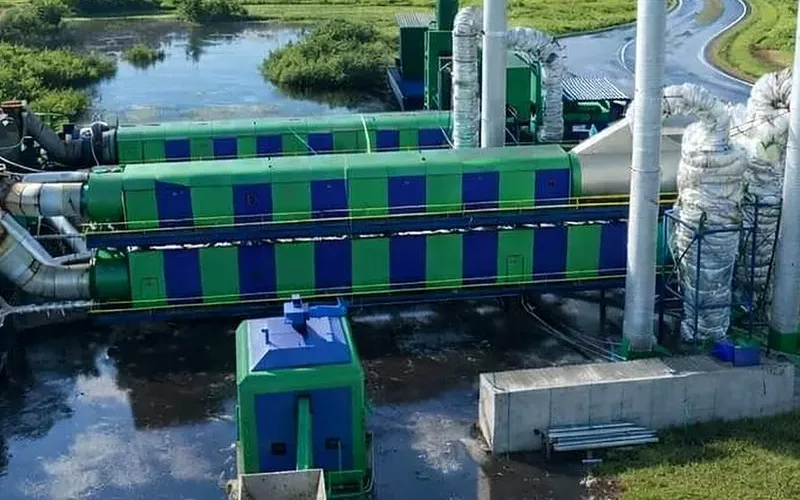 Sewage Sludge Sector
Sewage Sludge Disposal Systems
We reduce 75% moisture sewage sludge to 1-5% moisture. Complete disposal; the dried sludge generates revenue as biofuel.
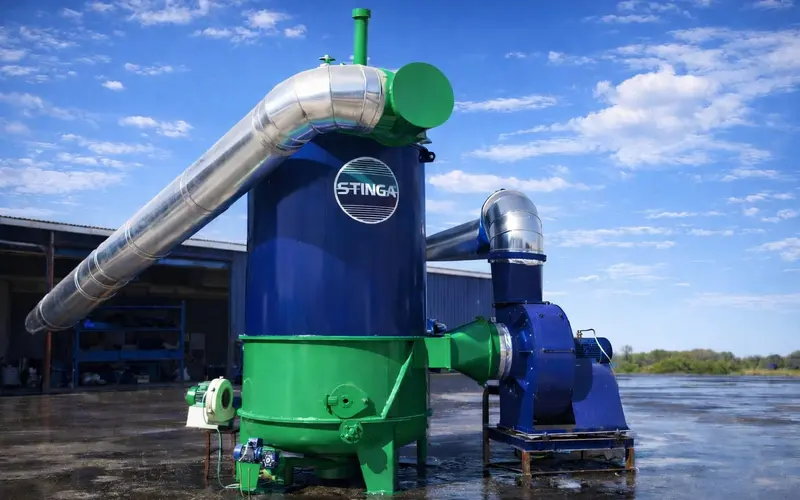 Poultry Sector
Poultry Systems
Litter disposal and poultry house heating solutions. A fully integrated system that turns waste into revenue and energy into savings.
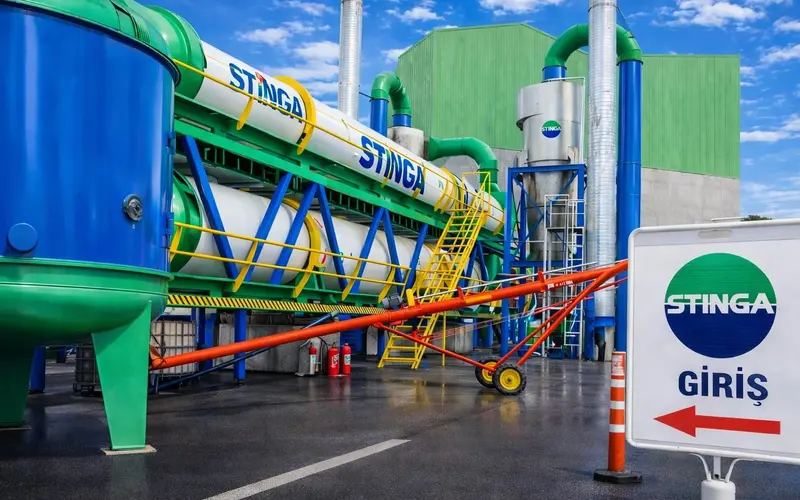 Industrial Mineral
Bentonite Drying Systems
We reduce raw bentonite from the mine with 30% moisture to 10%. A product ready for crushing, screening, and cat litter packaging.
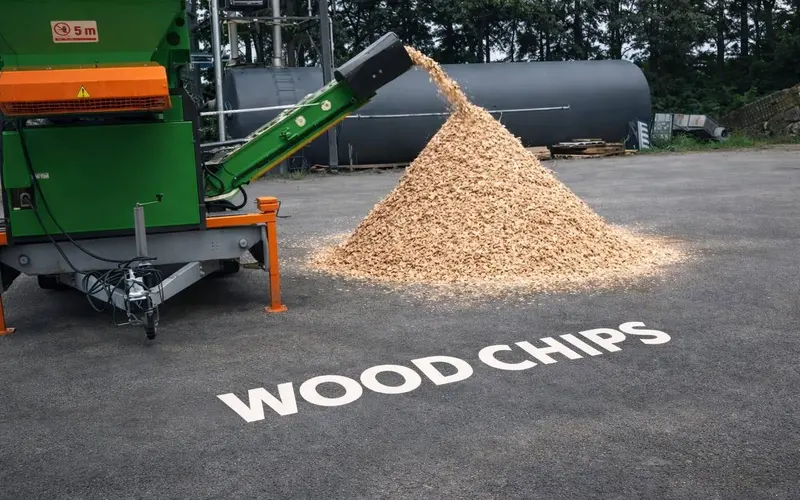 Biomass
Wood Chips Drying Systems
It dries pine wood chips with 55% moisture down to 5%. Convert wet wood chips into high-value biofuel.
LET'S MAXIMIZE THE VALUE OF YOUR COAL
We prepare a free calorific value increase and revenue analysis based on your daily coal production amount.
Stinga — Single-Deck Coal Drying
SINGLE-DECK — SINGLE SYSTEM
It reduces 55% moisture coal to 3%, and moisture does not return with drying below inherent moisture.
🏭 Single-Deck Advantage
In the Single-Deck system, the reactor and rotary kiln operate as one system. Installation time is kept to a minimum.
⚡ Technical Performance
💰 Single-Deck System Gross Profit Analysis
Technical Specifications
Single-Deck Coal Drying System

Featured Features
The Difference of the Single-Deck System

Single System
The reactor and rotary kiln operate as a single system.
Permanent Drying
Coal that drops below inherent moisture does not reabsorb moisture even in rain and snow — its calorific value and selling price are preserved.
+2,600 kcal/kg Gain
52% moisture is removed; 2,100 kcal + 2,600 kcal = 4,700 kcal output. An increase above 100% of the original value.
Autocritical Energy
The system can use its own dried coal as fuel; dependence on external energy decreases.
Transport Savings
A 52% moisture reduction lowers transportation weight — transportation cost per ton decreases.
134 Country Patent
Stinga technology is registered in 134 countries — industrial assurance and legal durability.
Media Gallery
Photo & Video
We Are Experts in Coal Drying.
Other Industries Also Prefer Us.
Sewage Sludge SectorSewage Sludge Disposal Systems
We reduce 75% moisture sewage sludge to 1-5% moisture. Complete disposal; the dried sludge generates revenue as biofuel.
Poultry SectorPoultry Systems
Litter disposal and poultry house heating solutions. A fully integrated system that turns waste into revenue and energy into savings.
Industrial MineralBentonite Drying Systems
We reduce raw bentonite from the mine with 30% moisture to 10%. A product ready for crushing, screening, and cat litter packaging.
BiomassWood Chips Drying Systems
It dries pine wood chips with 55% moisture down to 5%. Convert wet wood chips into high-value biofuel.
GO TO THE SITE WITH THE SINGLE-DECK SYSTEM
We prepare a free capacity analysis for your sites.
| Parameter | 🏭 Double-Deck 10,000 kg/h |
🏭 Single-Deck 5,000 kg/h |
⚙️ Ø3400 3,500 kg/h |
⚙️ Ø2600 2,000 kg/h |
⚙️ Ø1500 500 kg/h |
⛏️ Coal Double-Deck 30,000 kg/h |
🐔 Poultry House Heating Waste Heat |
♻️ Poultry litter 1,000 kg/h |
|---|---|---|---|---|---|---|---|---|
| 📊 CAPACITY & TECHNICAL | ||||||||
| Inlet moisture | %75 | %75 | %75 | %75 | %75 | %55 | — | %50–65 |
| Outlet moisture | %1–5 | %1–5 | %1–5 | %1–5 | %1–5 | 3% (permanent) | — | %10–15 |
| Fuel consumption | 240 kg/h | 150 kg/h | 150 kg/h | 80 kg/h | 15 kg/h | 240 kg/h | ≈ 0 EUR | 30 kg/h |
| Emissions | ≈ 0 | ≈ 0 | ≈ 0 | ≈ 0 | ≈ 0 | ≈ 0 | Zero additional | ≈ 0 |
| Installation Type | Fixed | Single-Deck 🏭 | Reactor-Top | Reactor-Top | Reactor-Top | Fixed / Single-Deck | Integration | Reactor-Top |
| 💰 REVENUE & SAVINGS | ||||||||
| Biofuel (RDF) Revenue | ✔ | ✔ | ✔ | ✔ | ✔ | — | — | — |
| Disposal savings | 150 EUR/ton | 150 EUR/ton | 150 EUR/ton | 150 EUR/ton | 150 EUR/ton | — | 80% savings | Fertilizer Sales |
| Calorific Value Gain | — | — | — | — | — | +2,600 kcal/kg | — | — |
| 🎯 WHO IS IT FOR? | ||||||||
| Target | Large Municipality | Multi-Site OIZ | Medium Municipality | Small-medium | Small Facility | Mine, Thermal Power | Broiler operation | Poultry farm |
| 134 Country Patent | ✔ | ✔ | ✔ | ✔ | ✔ | ✔ | ✔ | ✔ |
| Calculate ROI | 📊 Make a detailed calculation on the /yatirim-hesaplayici page → | |||||||